
You don’t need another workshop. You don’t need another 6-week discovery phase.
What you need is to ship.
The biggest reason digital products stall isn’t tech debt, team capacity, or even market conditions. It’s the bloated, bureaucratic circus called “development discovery.” You know, that sacred phase where everyone gathers in virtual rooms to map out user journeys, write up 40-page BRDs, and argue about color palettes for buttons no one’s even clicked yet.
Let’s call it what it really is: high-effort procrastination with a shiny label.
Discovery Is Eating Your Margins, Not Saving Them
Ask any dev agency why their last project was late, and there’s a good chance the answer starts with, “Well, we were in discovery for a while…” Translation: “We burned weeks and thousands of dollars figuring out things we could’ve learned faster by building.”
Let’s look at the math. A 4-week discovery phase with a team of five—say, a PM, UX designer, developer, strategist, and QA—at an average hourly rate of $125? That’s $100,000 spent without a single line of production code written.
Here’s the kicker: most of what’s “discovered” in these phases changes the second real users interact with a prototype. Because guess what? Users don’t give a damn about your polished Figma files. They care about utility. Function. Speed. And they’ll tell you loud and clear what’s working—if you actually give them something to use.
The Cult of Certainty Is Slowing You Down
Teams obsessed with nailing “every possible requirement” before writing a single function are playing defense. They’re terrified of rework, so they delay action in favor of theoretical perfection.
But here’s the punchline: perfect specs don’t prevent rework. They just delay it. You’re still going to iterate. You’re still going to adjust. And by then, you’ve already burned time you’ll never get back.
Real agility isn’t about the daily standup. It’s about having the guts to launch something slightly uncomfortable and iterate in public.
Real Talk: Most MVPs Don’t Need a Discovery Phase
If you’re building a compliance product for enterprise finance? Fine—run discovery. You’re threading legal needles.
But if you’re launching a direct-to-consumer app, a SaaS dashboard, or a web-based booking flow? Quit pretending your use case needs four weeks of stakeholder interviews and journey mapping.
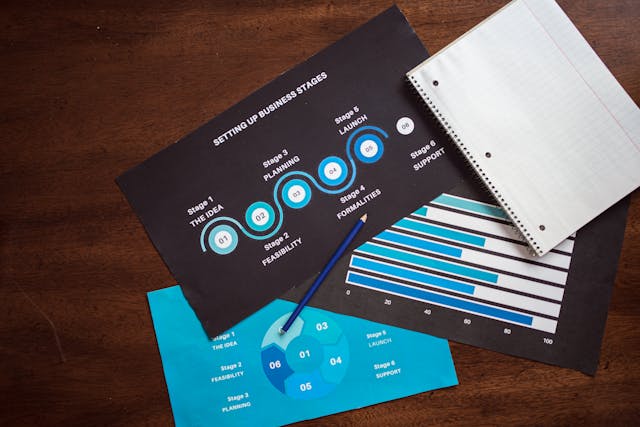
I’ve worked on a dozen launches where we built a working prototype in under 10 days. Why? Because we skipped the fluff. We sat down, defined the problem, made quick decisions, and built a testable version. Users validated what worked, and we iterated based on that—not opinion theater.
And guess what? Those products didn’t just launch faster. They performed better. Why? Because we didn’t waste momentum in the meeting vortex.
The Product Manager’s “What If” Spiral
There’s always that PM who wants to “pressure test every edge case” before a single dev ticket is touched. And listen, I get it—no one wants to miss a critical flow. But when the “what ifs” become the product strategy, you’re not managing risk. You’re inflating it.
A startup we advised last year spent six weeks modeling hypothetical onboarding flows before development. Not testing, not building. Modeling. Diagrams. Slides. Whiteboard screenshots in Slack.
When we finally pushed a working flow live? 80% of those edge cases never even occurred. Six weeks of mental gymnastics for problems that never existed.
And the kicker? The stuff they did miss was caught in the first 72 hours of live testing—because users did what users do: behave unpredictably.
Fast Feedback > Perfect Documentation
You don’t need a Miro board. You need a prototype. You don’t need “personas.” You need someone to click the damn button and tell you why it sucked.
Speed wins. According to McKinsey, companies that can rapidly iterate and ship digital products are twice as likely to outperform competitors on revenue growth. That’s not a fluffy “digital transformation” stat—it’s tied to bottom-line execution.
Source: https://www.mckinsey.com/capabilities/mckinsey-digital/our-insights/the-five-trademarks-of-agile-organizations
What that means in plain English: You’re not behind because your roadmap isn’t polished. You’re behind because you’re still in roadmap mode while competitors are onboarding users.
Discovery as a Crutch for Decision Avoidance
Here’s the dirty secret: a lot of discovery work is just a shield to avoid making hard calls.
No one wants to be the one who says, “Let’s just build it this way.” It’s easier to default to another brainstorm, another alignment call, another 40-slide Notion doc. That way, if things go sideways, the blame is diffused across a fog of “collaborative input.”

But indecision is more expensive than a wrong decision. Because it doesn’t just cost money—it kills team morale. Everyone feels stuck. Energy tanks. Progress halts.
And when teams do finally move? They move slow. Scared. Half-committed.
The Anti-Discovery Stack
Alright, here’s how we kill the fluff and get moving fast:
- Problem > Feature Spec
Define the real business or user problem in one sentence. No jargon. No bullshit. If you can’t explain it to a high schooler, it’s not clear enough. - Build the Flow, Not the Framework
Forget about modularity or scalability in week one. Build one clear user flow that works. You can optimize later. - Use Real Tools, Fast
Ditch the design roundtables. Use tools like Webflow, Retool, or FlutterFlow to get something working. You don’t need final branding. You need a screen someone can tap. - Launch Ugly, Learn Fast
Ship to a test group ASAP. Use tools like PostHog or Hotjar to track actual behavior. Let real users expose real issues. - Fix What Matters, Not What’s Loudest
Prioritize based on impact. The CEO’s pet feature isn’t necessarily what moves the needle. Data > opinions. Every time.
When Discovery Does Make Sense
Not every project should go straight to code. If you’re building for regulated markets, integrating across five legacy systems, or navigating thorny internal politics? You’re not skipping discovery entirely. But even then—it should be scoped like a military op, not a vision quest.
Set a hard cap. Get aligned fast. Then build something testable.
Closing Shot: Build First, Rationalize Later
The best ideas rarely survive the whiteboard. They evolve in the wild.
You can’t think your way into product-market fit. You have to build your way there.
So next time someone suggests another “collaborative discovery sprint,” ask them this:
What if we just built something tomorrow instead?
Chances are, you’d be launching weeks sooner—and actually getting answers instead of hypothetical alignment.
Skip the fluff. Ship the thing.
Want this approach baked into your next launch?
Let’s talk. I help digital teams move fast, cut the fat, and launch smarter. Hit me up—no fluff, just momentum.